The Week Before Christmas
The last week before Christmas carries a kind of magic all its own.
The calendar is still ticking. Lessons are still planned. But something shifts. Kids sense what’s coming, and their excitement spills into everything—questions come faster, laughter louder, curiosity more alive. It’s a week that reminds me that learning was never meant to be rigid. It was meant to be responsive.
At our house, we love a themed learning week and this week has been “Christmas Week”. Christmas Week- or any other themed week- invites us to loosen our grip just enough to notice what our children actually need.
One of the greatest gifts of learning at home—or in a family-centered model like REC—is the freedom to adjust the pace. To linger where interest is deep. To skim where mastery already lives. To pause when hearts are full or tired or brimming with questions that don’t fit neatly into a lesson plan.
Some days, that means setting aside the workbook because the conversation around the breakfast table is richer than anything on the page. Other days, it means pressing in—rereading a chapter, practicing a skill again, or gently strengthening what feels shaky. And sometimes, it means letting something go altogether, trusting that not every box needs to be checked for meaningful growth to happen.
This flexibility isn’t a lack of structure. It’s wisdom. It’s knowing that children are not machines—and that learning sticks best when it feels alive.
Christmas week is also a reminder of the power of hands-on learning.
There is something sacred about learning that can be held, poured, shaped, built, or tested. When children’s hands are busy, their minds often follow. During weeks like this, learning doesn’t pause—it transforms.
Learning doesn’t have to be heavy to be meaningful. Laughter does not diminish rigor—it strengthens it. When children associate learning with warmth, curiosity, and connection, they carry that posture in learning with them far beyond elementary years.
Christmas Week reminds us that joy is not a distraction from education. It is the doorway.
Below are two simple ways to lean into meaningful, hands-on learning this season—no pressure, no perfection required.
Read-Aloud Companion: The Best Christmas Pageant Ever
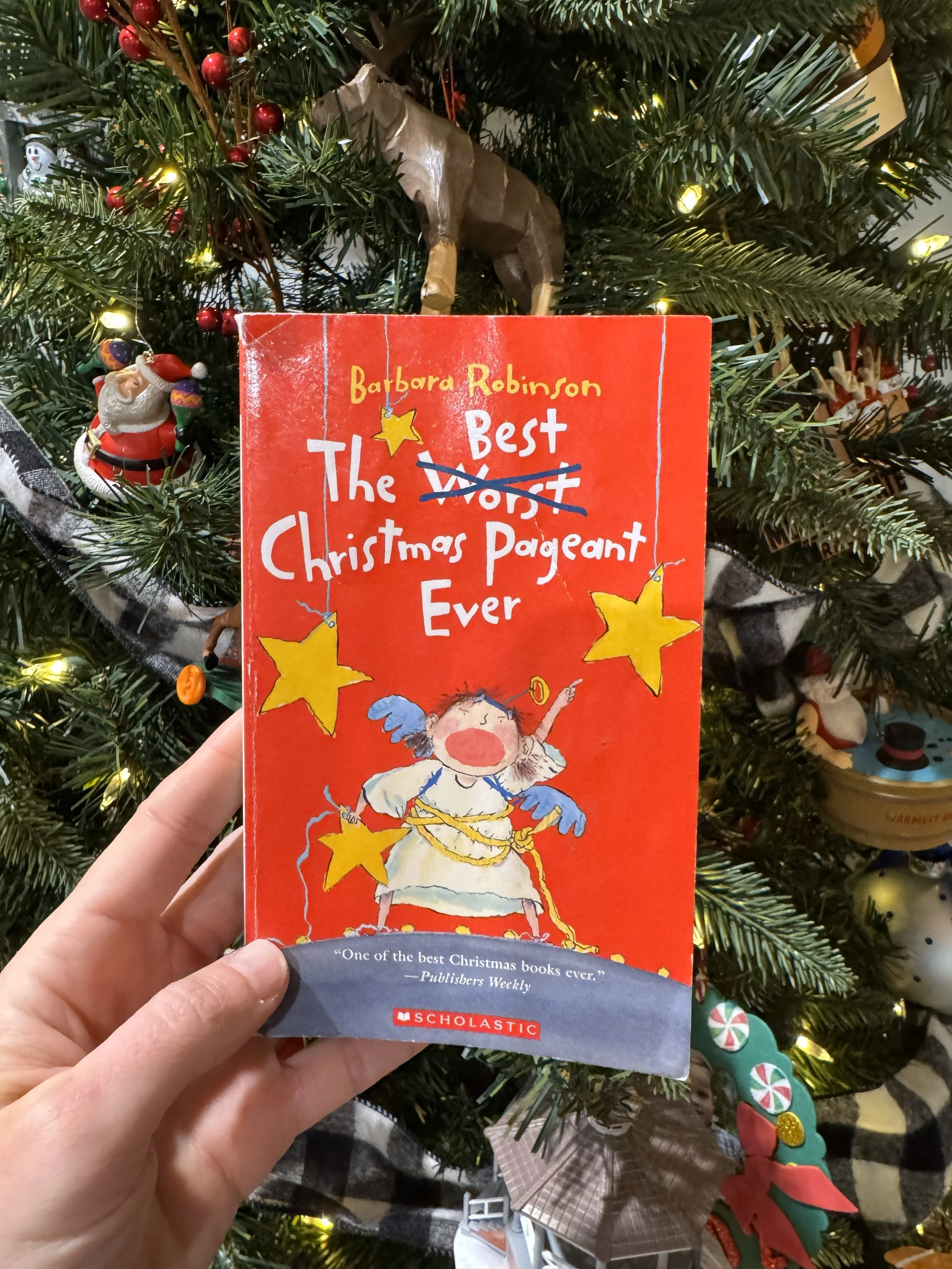
This story opens the door to conversations about grace, kindness, expectations, and seeing people differently than we expect. Use these questions naturally—over hot cocoa, in the car, or around the table.
Discussion Questions for Elementary Students:
What kind of people were the Herdman kids at the beginning of the story?
Why do you think everyone was nervous about the Herdmans being in the Christmas pageant?
What surprised you most about the way the Herdmans acted as the story went on?
How did the Christmas story feel different when the Herdmans told it?
What does it mean to see someone with “new eyes”?
Was there a moment when you felt sympathy for the Herdmans? Why?
How did the adults change throughout the story?
What do you think this book teaches us about grace?
If you were in the pageant, what role would you want to play—and why?
How can we show kindness or understanding to people who are different from us?
Hands-On Science: Borax Christmas Ornaments
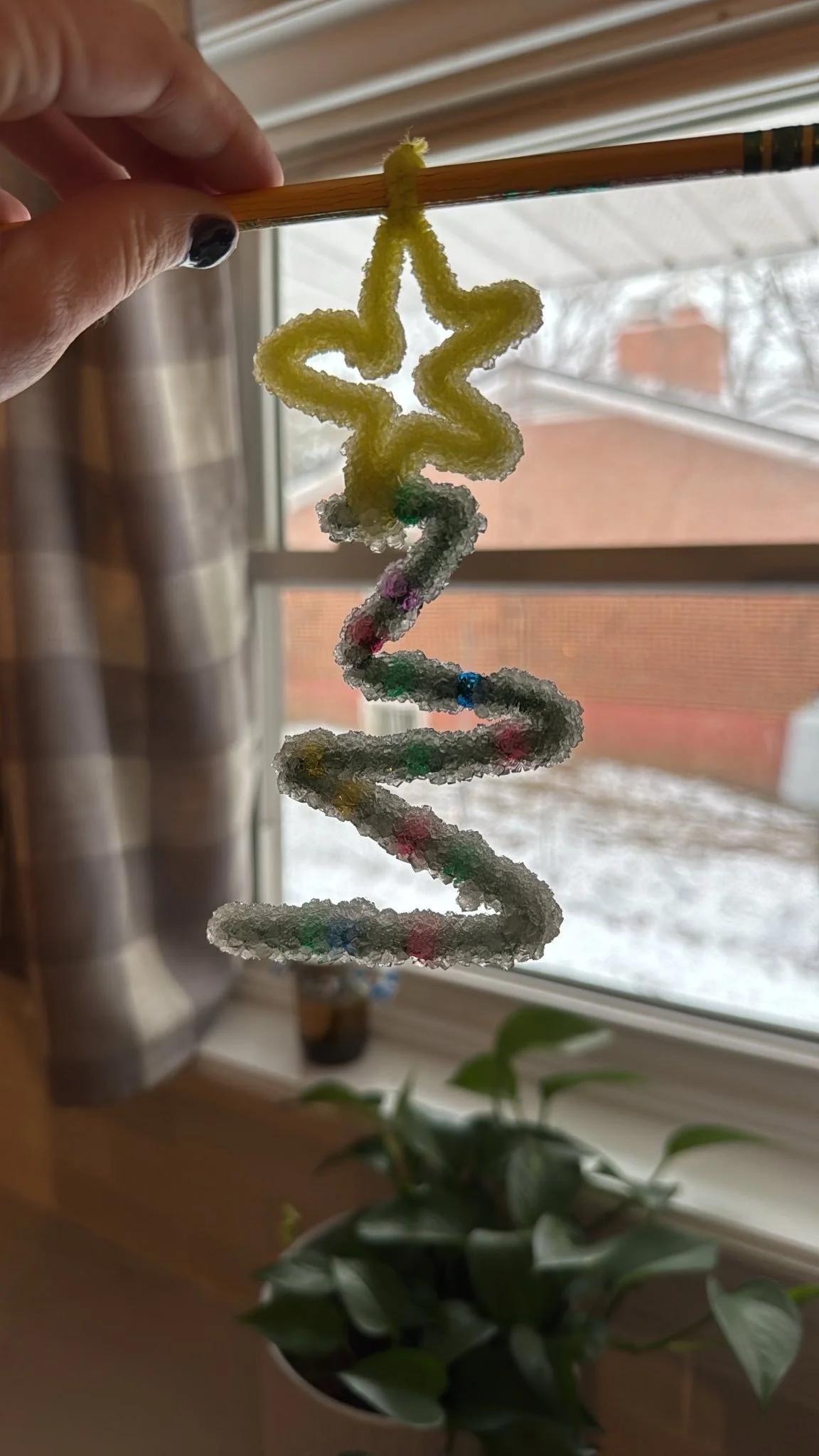
This simple activity feels like magic—but it’s rich with science, patience, and wonder.
You’ll Need:
Borax (found in the laundry aisle)
Pipe cleaners
String or yarn
Pencil or craft stick
Wide-mouth jar or cup
Boiling water
How To:
Shape pipe cleaners into simple Christmas designs (stars, trees, hearts, snowflakes).
Tie one end of a string to the shape and the other end to a pencil.
Fill a jar with very hot water (adult help required).
Add Borax—about 3 tablespoons per cup of water—stir until no more will dissolve.
Lower the pipe cleaner into the solution so it hangs freely.
Leave undisturbed overnight.
The next day, observe the crystals that have formed and gently remove your ornament.
Learning Connections:
Talk about solutions and saturation
Observe crystal growth
Practice patience and careful observation
Write or draw what changed overnight
We have loved Christmas Week—but we don’t need Christmas as an excuse to learn and engage creatively.
What this week really reminds us is that meaningful learning is not confined to a season, a theme, or a special set of activities. When children are given space to wonder, to work with their hands, to ask questions, and to laugh while they learn, education becomes something they step into willingly—not something they have to be pushed through.
Join me in praying as we work to create a space at REC where kids can do just that—wonder, and laugh, and love learning.
With grace and grit—
Kehla